Riftbound in Thailand: How the League of Legends Card Game Works, and Where to Start
Riftbound is League of Legends as a card game you play on a table. You do not race to empty a life total: you fight over battlefields, and the first player to 8 points wins. How it works, how a deck is built, and what to buy first in Thailand.
Kira Cards Editorial Team
Written by the team behind Kira Cards Co., Ltd. (Patong, Phuket), full-time TCG retailers and collectors since 2026. About the team
What Riftbound is
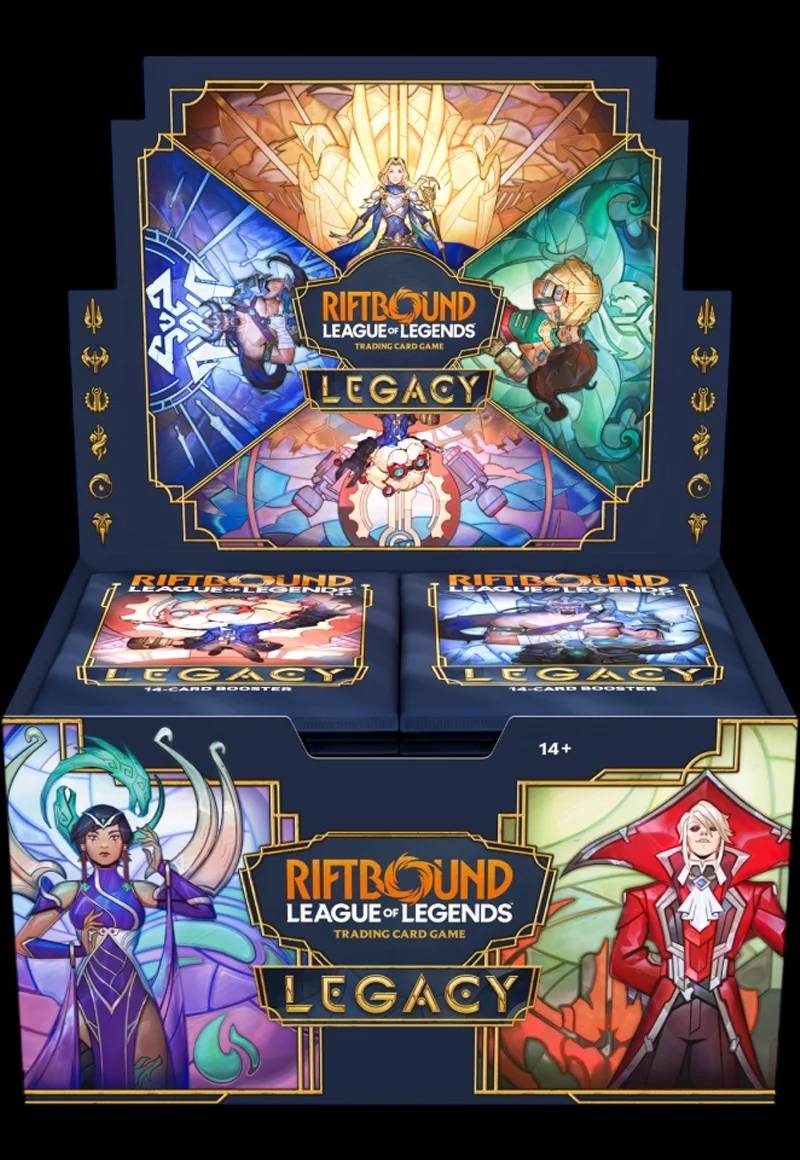
Riftbound is the official trading card game of League of Legends, made by Riot Games and distributed by UVS Games. It is a physical card game: you buy boosters and decks, sit down across a table, and play.
It launched first in China in August 2025, then reached English-speaking players with its first set, Origins, on 31 October 2025. Spiritforged, Unleashed, Vendetta and Radiance followed, and the sixth set, Legacy, releases worldwide on 29 January 2027. Legacy is where Kira Cards starts stocking the game.
The pitch is simple for anyone who knows League. Your deck is led by a champion, your units fight over battlefields rather than over a life total, and the game rewards the same thing the Rift does: taking ground and holding it.
How a game works
A game is for two to four players, and the goal is points, not knocking your opponent out. You win at 8 points, or 11 in a team game.
Points come from battlefields. Units move onto them and fight for control:
- take control of a battlefield and you score 1 point
- still hold it on your next turn and you score another
Fights are decided by Might, the number a unit uses to deal damage and to take it. If your units are the only ones left standing on a battlefield at the end of a fight, it is yours.
Cards are paid for with runes, which come from a separate deck of their own. You get two new runes every turn, and each one can be used in two ways. Turn it sideways and it pays for normal costs. Send it back to the rune deck and it pays for the more powerful effects, and it will come back later. Knowing when to send runes back is a real part of the skill.
The result is a game where position matters more than raw damage. A smaller board that holds two battlefields is often the one that is winning.
How a deck is built
A constructed deck has four parts:
- a Legend: the champion your deck is built around. It sets your two domains, the colours you are allowed to play
- a Chosen Champion: a champion unit that matches your Legend, guaranteed to be available to you every game
- a main deck of 40 cards, Chosen Champion included, with at most 3 copies of any card
- a rune deck of 12, split between your two domains, and 3 battlefields
There are six domains, each with its own colour and play style: Fury (red), Calm (green), Mind (blue), Body (orange), Chaos (purple) and Order (yellow). Jinx, for example, is Fury and Chaos, so a Jinx deck can play red and purple cards but not green ones. Two decks with different Legends do not just look different, they draw from different parts of the card pool.
Riot's own advice for a first deck is to start from a preconstructed one and change it a few cards at a time. That is how most people learn any card game, and it works here too.
One against one, teams, and draft
Most games are one against one. Team games exist too, where the target rises to 11 points, and Riot runs a separate 2v2 constructed format with its own ban list.
Then there is limited play, where you build a deck on the spot from boosters you open. In Riot's Sealed events, each player opens six boosters and builds a 25-card deck with up to three domains, no Legend required. It is the friendliest way to learn, because nobody arrives with a stronger collection than yours.
Legacy pushes in that direction: Riot calls it the first Riftbound set built for drafting. That alone is a good reason to start with Legacy rather than with an older set. Our Legacy guide covers what is in it.
One point for the long term: Riot has said that set rotation in its main constructed format is planned from 2028. Until then, every set printed so far is legal in sanctioned tournaments.
What to buy first
It depends on what you want from the game.
- To learn and play with a friend straight away: a preconstructed deck. For Legacy, Riot has announced four Champion Decks at launch (Tryndamere, Ashe, Lux and Garen), then Proving Grounds 2nd Edition on 19 February 2027: four ready-to-play decks, four oversized battlefields, four paper playmats and a rulebook in one box
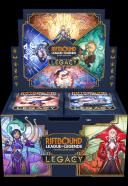
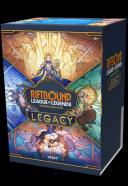
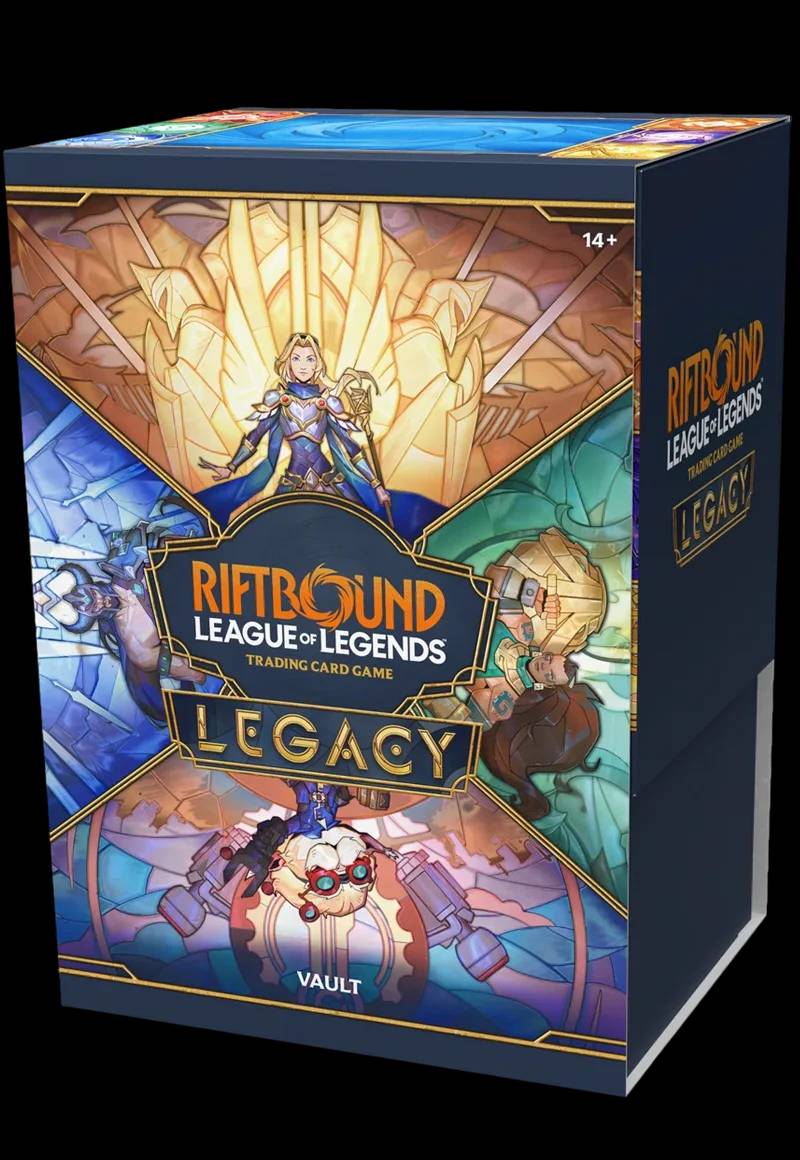
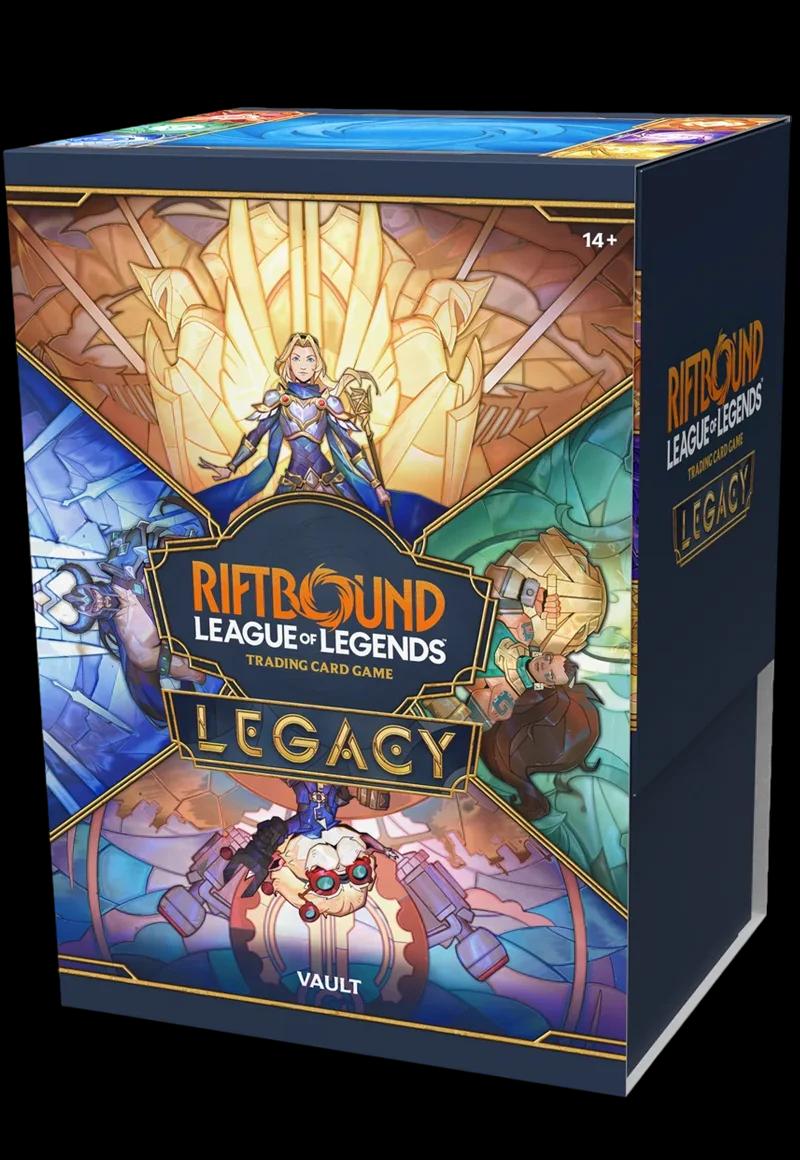
- To build your own decks: the Legacy Vault. Six boosters plus 36 basic Runes, the part a new player is always short of
- To open the set properly, or run a Sealed night: the 24-pack booster display. At six boosters each, one display covers four players
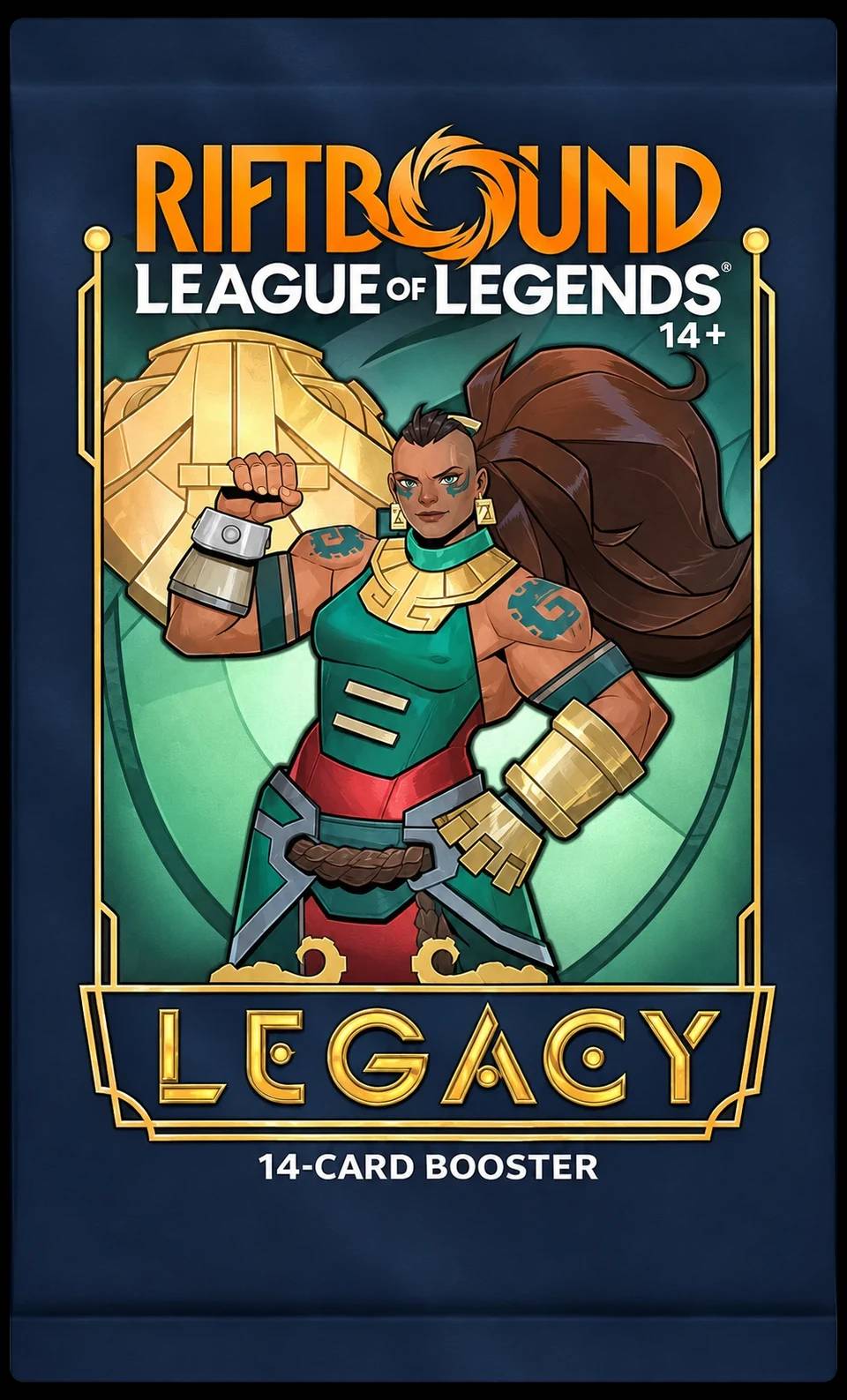
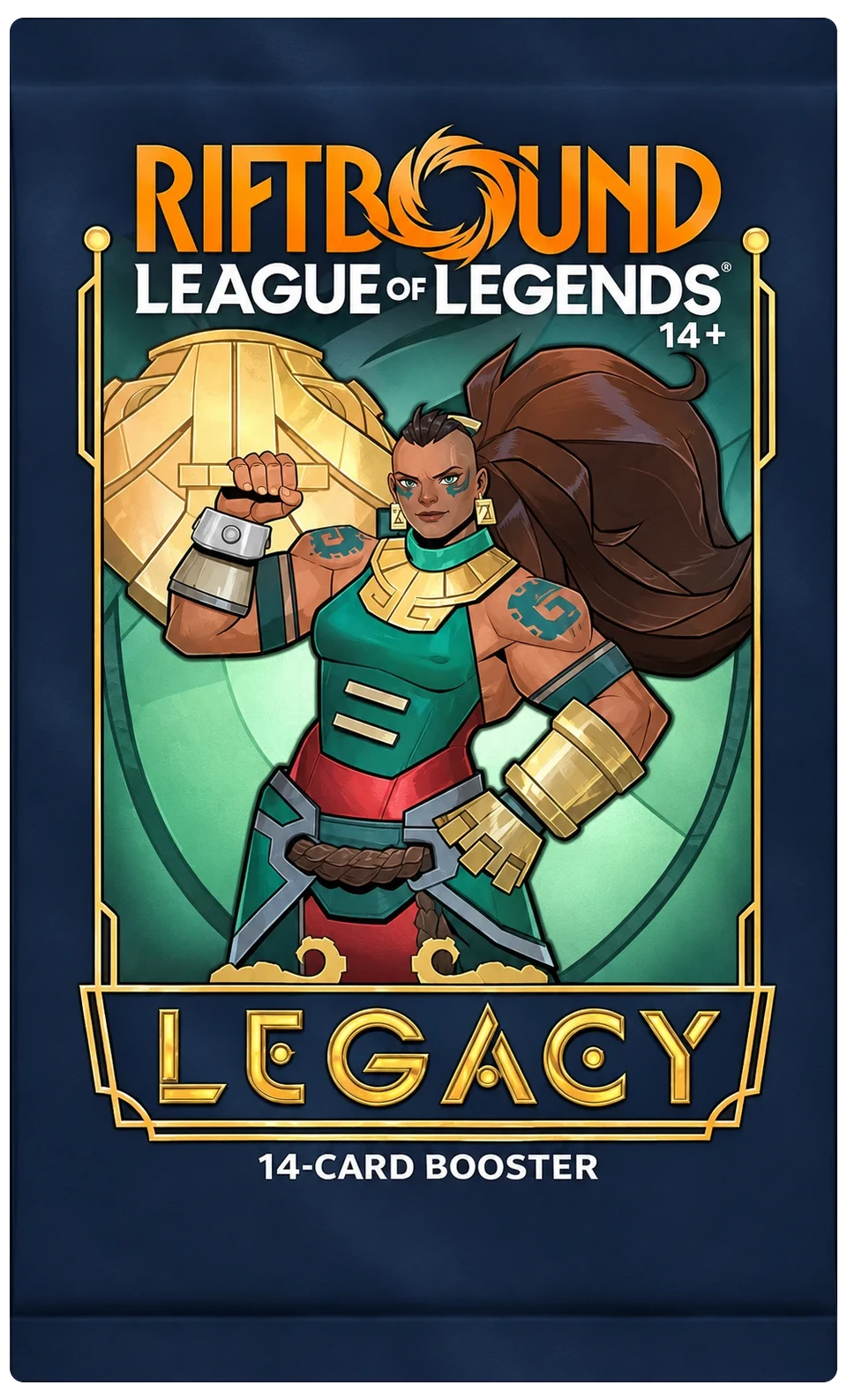
A Legacy booster holds 14 cards.
The Champion Decks and Proving Grounds are not in our first order. If you want one, ask us and we will look at adding it to the next one.
Riftbound in Thailand
Since May 2026, Riot has officially distributed the English edition of Riftbound in Southeast Asia, Thailand included, through UVS Games. No Thai-language edition has been announced, so English is the edition we stock.
Kira Cards opens its Riftbound range with Legacy. The booster display and the Vault are on pre-order now, paid in full, and ship or are ready to collect in Patong in the week after the 29 January release. Orders ship to all 77 provinces with tracked delivery, a flat ฿60, free over ฿5,000.
The local scene is young but real: official Nexus Night events already run in a few stores in Bangkok and Phuket. If you already play, or want to start, come and tell us at the store, 179 ภก.4055 in Patong, open every day from 12:00 to 18:00. The more players we know about, the easier it is to put more Riftbound on the shelf.
| Rule | Detail |
|---|---|
| Players | 2 to 4 |
| To win | 8 points (11 in a team game) |
| Scoring | 1 point for taking a battlefield, 1 more on your next turn if you still hold it |
| Main deck | 40 cards, Chosen Champion included, max 3 copies of a card |
| Rune deck | 12 runes, 2 new ones each turn |
| Battlefields | 3 per deck |
| Domains | Fury, Calm, Mind, Body, Chaos, Order |
| Legacy booster | 14 cards |
Frequently asked questions
Do I need to play League of Legends to enjoy Riftbound?
No. The champions and places come from League, so fans will recognise them, but the rules stand on their own. Knowing League mostly helps you guess what a champion's cards want to do.
Is Riftbound hard to learn?
The core fits in a few lines: take battlefields, hold them, and the first player to 8 points wins. Runes take a game or two to get used to, because you choose between turning them for normal costs and sending them back for bigger effects. A preconstructed deck or a Sealed game is the easiest start.
Is there a Thai version of Riftbound?
No Thai-language edition has been announced. The English edition has been officially distributed in Thailand since May 2026, and that is the one Kira Cards stocks, starting with Set 6, Legacy.
What should I buy first?
To play straight away, a preconstructed deck. To build your own decks, the Legacy Vault, because its 36 Runes cover what boosters alone do not. To open the whole set or run a Sealed night for four, the 24-pack display.
When can I get Riftbound Legacy in Thailand?
Legacy releases worldwide on 29 January 2027. Pre-orders at Kira Cards ship, or are ready to collect in Patong, within the week following release.
Ready to Start Collecting?
Factory sealed products, verified supply chain. Available in-store in Phuket and shipped nationwide.
See the Riftbound pre-orders